The best Great Pyramid facts on the web! Did slaves build the pyramids? How many stones were used? Were there mummies in them? You'll be amazed when you read this post.
The Great Pyramid of Giza is one of the most impressive buildings in all of human history. It's so old that it's really hard to get your head how long it's been around. It's even harder to picture some architect coming up with the idea in the first place--and then getting all those people to build it. I'm sure glad they did. We're still talking about it today!
1. How many stones make up the Great Pyramid?
The Great Pyramid of Giza is one of the most impressive buildings in all of human history. It's so old that it's really hard to get your head how long it's been around. It's even harder to picture some architect coming up with the idea in the first place--and then getting all those people to build it. I'm sure glad they did. We're still talking about it today!
16 Fascinating Pieces of Great Pyramid Trivia
1. How many stones make up the Great Pyramid?
Approximately 2.3 million stones.
2. How big is each stone?
2. How big is each stone?
Each stone weighed around 2.5 tons, although they varied in size. Not every stone was identical.
3. Who built the Great Pyramids of Egypt?
Rulers or kings of ancient Egypt. We call these kings 'pharaohs'. The biggest, the Cheops or Great Pyramid was built by Pharaoh Khufu.
The actual labor was done by architects, stone cutters, stone haulers, carpenters, overseers, artists, priests, and more.
These builders had an enormous support crew: bread bakers, cooks, beer brewers, launderers, barbers, basically a small village of people.
4. How tall is it?

The ancient monument is 450 feet tall. To put this in modern terms, it's around the same height as a 45-story apartment or office building.
By comparison, the Statue of Liberty is 300 feet. The tallest dinosaur (the Sauroposeidon), stood at 58 feet.
By the way, the sides of the pyramid are each over a quarter mile long. So if you walked around it once, you would travel more than a mile!
5. How much does it weigh?

5,750,000 tons (5,216,308,000 kilograms). It sure looks like it, too. That's a lot of rock.
Let's break it down mathematically:
The building is constructed of approximately 2.3 million blocks of limestone. Each block weighs around 2.5 tons (2267.96 kilograms). So 2,300,000 x 2267.96 = 5,216,308,000 kilograms (5,750,000 tons). In other words, it weighs around 12 billion pounds.
BONUS FACT
It is the 3rd heaviest man-made object in the world.
The heaviest is the Great Wall of China, and the 2nd heaviest is the Three Gorges Dam in China.
6. Did slaves build the pyramids?

For years, people were sure slaves built the pyramids. However, this has turned out to be untrue. In fact, men were hired and paid wages. Writings and other evidence has been found to back this up.
Also, the workers were buried in sacred graves--right next to the monumental structure. This was a great, great honor, and showed how much they were valued and respected.
7. How did the pyramid builders get paid?
Money wasn't used in those days. It didn't exist yet. Instead, goods were bartered in exchange for work.
The construction crew would have been paid in rations like meat, bread, and beer. The laborers could then turn around and barter these 'wages' for other things. Also, they were provided with healthcare, a place to live, access to priests, and much more.
8. How long did it take to build them?
It took around 30 years and 10,000 men to build Khufu's Cheops pyramid. The workers labored hard and their remains show this. We can actually tell by looking at their mummified bones that the work was very tough.

9. Were there mummies in the pyramids?
It's probable that at one time in history, they contained mummies. The pyramids are believed to be giant tombs designed to hold a pharaoh's remains. Yet we can't know for certain. It's possible that they were built for reasons that were sacred to the ancient Egyptians and remain a mystery to us.
10. Who was buried in the Great Pyramid?

The famous Cheops monument was built for Pharaoh Khufu. However, we have no idea where Khufu's mummy is, or if he was ever buried in the King's Chamber. It's likely that raiders broke into the pyramid before modern explorers arrived on the scene.
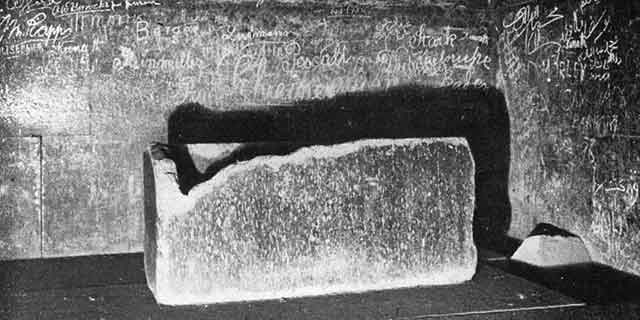
That's Khufu's heavy stone sarcophagus (coffin) pictured above. Was it ceremonial? Or did it hold his mummy at one point in time? We simply don't know. It's not shaped like a mummy, that's for sure.
Here's something interesting: look closely at the photo--you might think it's ancient writing on the wall. In fact, it's modern graffiti!
11. Has a mummy ever been found in a pyramid?
No.
No mummy has ever been found inside a pyramid.
12. What did they put inside the pyramids?

Not only was Khufu's mummy 'gone', but archaeologists also found no treasure inside the huge structure. Contrast that with the picture above of the grave goods found in King Tut's secret tomb in the Valley of the Kings.
Ancient Egyptians believed that you could take things with you to the next life. They packed their burial sites as though they were moving house, or going on a very long vacation. It's possible that Khufu's pyramid contained all manner of things such as:
13. Was there really a boat at Khufu's pyramid?

On the bright side, explorers found one incredible treasure at Giza. It was sealed inside a pit at the base of the pyramid complex. It's the solar ship seen above.
The funerary ship is the oldest ship in existence, and was so well built that it's been called "a masterpiece of woodcraft". If placed in the water today, you could actually ride in it.
No one knows the real purpose of this boat, also called a solar barge, but it's believed to be a ritual vessel used to carry the deceased pharaoh across the heavens, with the help of the Egyptian sun god, Ra.
The boat is 143 feet (44m) long and 19.5 feet (6m) wide.
14. Can you go inside them?

Khufu's pyramid has multiple chambers and shafts inside.
How many rooms does it have? Three (3) that we know about. They are as follows:
The King's Chamber (where the sarcophagus is located, see Fact #10). You can reach the King's Chamber via the Grand Gallery, which is an impressive feat of architecture that also serves as a structural purpose. It spreads out the building's weight so that the building doesn't collapse onto the King's Burial Chamber.
The Statue Chamber (most often referred to as the Queen's Chamber, but that's a mistake. No queen was buried here).
The Subterranean or Underworld Chamber. The purpose of this subterranean room remains a mystery.
A fourth, mysterious chamber has been identified using modern imaging techniques, but there is no way to access it at present.
15. What is written inside the King's Chamber in the Great Pyramid?
In fact, nothing was written inside the King's Chamber. Recently, however, several hieroglyphs were found on the floor of the Statue Chamber/Queens Chamber. They are written in red paint. They have been identified as mathematical figures left behind by the builders.
16. Are there still mysteries to discover?
9. Were there mummies in the pyramids?
It's probable that at one time in history, they contained mummies. The pyramids are believed to be giant tombs designed to hold a pharaoh's remains. Yet we can't know for certain. It's possible that they were built for reasons that were sacred to the ancient Egyptians and remain a mystery to us.
10. Who was buried in the Great Pyramid?
The famous Cheops monument was built for Pharaoh Khufu. However, we have no idea where Khufu's mummy is, or if he was ever buried in the King's Chamber. It's likely that raiders broke into the pyramid before modern explorers arrived on the scene.
That's Khufu's heavy stone sarcophagus (coffin) pictured above. Was it ceremonial? Or did it hold his mummy at one point in time? We simply don't know. It's not shaped like a mummy, that's for sure.
Here's something interesting: look closely at the photo--you might think it's ancient writing on the wall. In fact, it's modern graffiti!
11. Has a mummy ever been found in a pyramid?
No.
No mummy has ever been found inside a pyramid.
12. What did they put inside the pyramids?
Not only was Khufu's mummy 'gone', but archaeologists also found no treasure inside the huge structure. Contrast that with the picture above of the grave goods found in King Tut's secret tomb in the Valley of the Kings.
Ancient Egyptians believed that you could take things with you to the next life. They packed their burial sites as though they were moving house, or going on a very long vacation. It's possible that Khufu's pyramid contained all manner of things such as:
- Food
- Furniture
- Momentos
- Statues of gods and goddesses
- Wigs, ointments, mirrors, combs
- Clothing
- Jewelry
13. Was there really a boat at Khufu's pyramid?
On the bright side, explorers found one incredible treasure at Giza. It was sealed inside a pit at the base of the pyramid complex. It's the solar ship seen above.
The funerary ship is the oldest ship in existence, and was so well built that it's been called "a masterpiece of woodcraft". If placed in the water today, you could actually ride in it.
No one knows the real purpose of this boat, also called a solar barge, but it's believed to be a ritual vessel used to carry the deceased pharaoh across the heavens, with the help of the Egyptian sun god, Ra.
The boat is 143 feet (44m) long and 19.5 feet (6m) wide.
14. Can you go inside them?
Khufu's pyramid has multiple chambers and shafts inside.
How many rooms does it have? Three (3) that we know about. They are as follows:
The King's Chamber (where the sarcophagus is located, see Fact #10). You can reach the King's Chamber via the Grand Gallery, which is an impressive feat of architecture that also serves as a structural purpose. It spreads out the building's weight so that the building doesn't collapse onto the King's Burial Chamber.
The Statue Chamber (most often referred to as the Queen's Chamber, but that's a mistake. No queen was buried here).
The Subterranean or Underworld Chamber. The purpose of this subterranean room remains a mystery.
A fourth, mysterious chamber has been identified using modern imaging techniques, but there is no way to access it at present.
15. What is written inside the King's Chamber in the Great Pyramid?
In fact, nothing was written inside the King's Chamber. Recently, however, several hieroglyphs were found on the floor of the Statue Chamber/Queens Chamber. They are written in red paint. They have been identified as mathematical figures left behind by the builders.
16. Are there still mysteries to discover?
Yes! There are still many mysteries to discover. For example: what's the inaccessible chamber found recently via modern imaging? Are there underground passages that we're not yet aware of? Do hidden passages lead to secret underground rooms? Was it really just a burial tomb, or did the building's design have a larger spiritual purpose? Is it possible there's undiscovered treasure inside?
There's no doubt that the world will continue to ask questions and try to find answers. Maybe that's why it's called one of the Seven Wonders Of The World.
There's no doubt that the world will continue to ask questions and try to find answers. Maybe that's why it's called one of the Seven Wonders Of The World.
Top 16 Great Pyramid Facts
It's made of 2.3 million stonesThe stones weigh around 2.5 tons eachPharaoh Khufu built the Great PyramidIt's 450 feet tallIt weighs 5,750,000 tonsSlaves did not build the pyramidsThe workers were paid in goods and servicesIt took around 30 years to buildUncertain if pyramids were ceremonial, not burialKhufu may once have been buried insideNo mummy has ever been found in oneBurial goods were probably housed insideA boat was found in a pit at the baseYou can go inside the Great PyramidNothing is written in the King's ChamberThere are still mysteries to be solved
NEXT: Read these fun facts about Pharaoh Khufu, the man behind the Great Pyramid of Giza.
Thanks for sharing!